Yoga for complete beginners: how to choose your first class
Hatha, vinyasa, yin, hot, restorative. The names are confusing, but picking a first class is simpler than it looks.
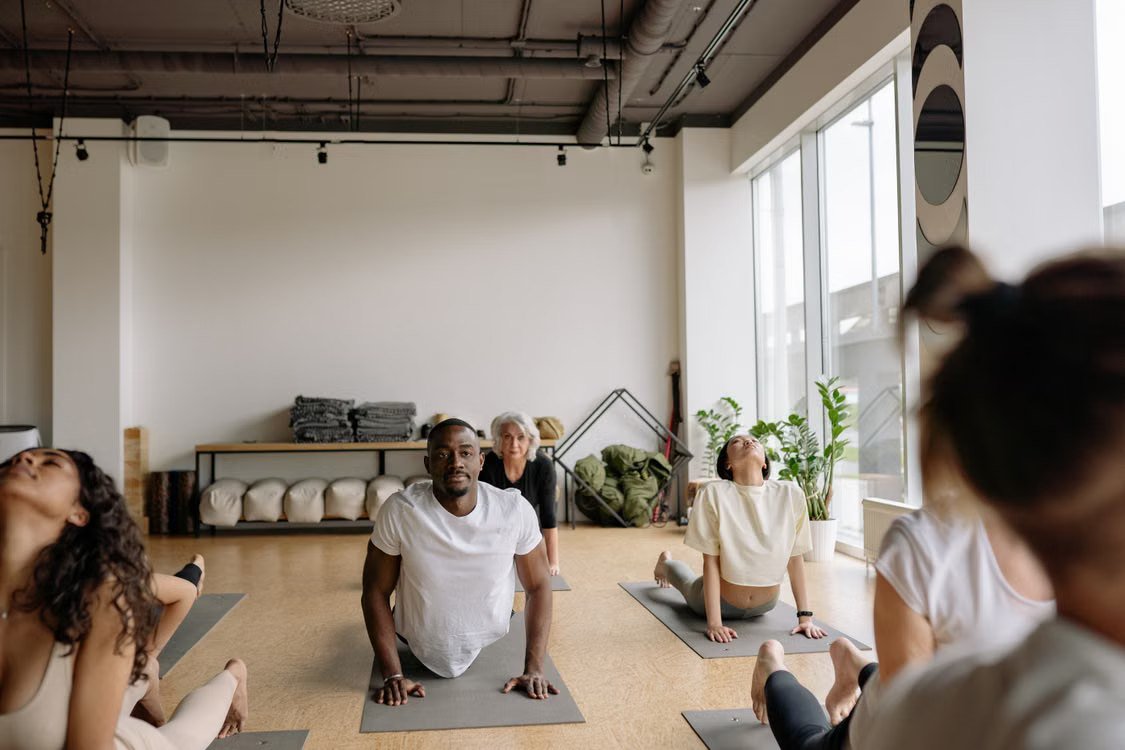
Most people who are nervous about their first yoga class are worried about the same things: not being flexible, not knowing what to do, and being the only beginner in the room. The good news is that almost every studio sees new people every week, and a well-taught class is built so that anyone can follow along.
The hardest part is usually the timetable, which can read like a menu in another language. Here is what the most common names mean.
The styles you will see most
- Hatha. A broad name that usually means a slower class where you hold each pose for a few breaths. A good place to start.
- Vinyasa or flow. Poses linked together in a steady rhythm with the breath. More movement, often warmer. Look for "slow flow" or "level 1" if you are new.
- Yin. Long, quiet holds of two to five minutes, mostly on the floor. Gentle on the muscles, but it asks for patience.
- Restorative. Very few poses, fully supported by bolsters and blankets. Closer to resting than exercising.
- Hot yoga. Any of the above in a heated room. Worth trying once you know the basics, and check with your doctor first if heat is a concern for you.
- Chair or gentle yoga. Adapted so you can do most of the class seated or with support. Ideal if getting down to the floor is hard.
What happens in a class
Classes usually run 45 to 75 minutes. You will start with a few minutes of breathing or settling, move through a sequence of poses, and finish lying down for a short rest called savasana. Teachers often offer an easier and a harder version of each pose. Taking the easier one is never wrong.
What to bring
- Clothes you can move and bend in. Nothing too loose, or it ends up over your face.
- Water.
- A mat if the studio does not lend them. Many do, so check before you buy one.
- Bare feet. You will take your shoes off at the door.
How to choose a studio
- Look for classes labelled beginner, foundations, level 1 or "all levels".
- Read how teachers describe their training. Many list a Yoga Alliance registration such as RYT 200 or 500, which tells you they finished a teacher training.
- Check the class size. Smaller rooms mean more help from the teacher.
- Many studios offer a free or low-cost first class or an intro week. It is the easiest way to try a few teachers.
- Tell the teacher before class about any injury, pregnancy or condition. They will suggest changes.
Yoga is a movement practice, not a medical treatment. If you have a health condition, check with your doctor before starting a new kind of exercise.